
Chemical Peels Outperform Expectations for Denver Summer Skin

There's a common misconception floating around Denver that chemical peels and summer don't mix. The thinking goes something like this: peels are for fall and winter, when the sun is less intense and you can hide indoors while you heal. And while timing does matter — more on that in a moment — the idea that peels are off-limits between June and August misses something important. When planned correctly and customized to your skin, a chemical peel in or around summer can be one of the most effective things you do for your skin all year.
At AOB Med Spa, Jesica and Tara have spent years helping Denver patients navigate exactly this kind of confusion. Their approach isn't to hand you a generic protocol and send you on your way. It's to look at your skin, understand what you're working with, understand how you live — weekend hikes, outdoor patios, all of it — and build something that actually works for your life.
What a Chemical Peel Actually Does
At its core, a chemical peel uses a carefully selected solution to accelerate your skin's natural renewal process. Depending on the depth of the peel — superficial, medium, or deeper — it works on different layers of the skin to remove dulling surface cells, address uneven pigmentation, smooth texture, and stimulate the production of fresh collagen beneath the surface. The result isn't a dramatic, obvious "procedure look." Done well, a chemical peel makes your skin look like the best version of itself. Clearer. More even. More awake. Patients often say they start getting compliments before they can even articulate what changed — which is exactly the kind of outcome AOB patients have come to expect.Summer in Denver Is a Unique Skin Challenge
Denver sits at over 5,000 feet of elevation, and that matters more than most people realize. UV radiation is significantly more intense here than at sea level — roughly 25% stronger, by most estimates — and that intensity doesn't take a break just because it's a beautiful day. Add in dry air, significant sun exposure during outdoor activities, and the kind of lifestyle Denver residents actually live, and you have a recipe for cumulative sun damage that builds up quietly over years. If you've noticed that your skin looks a little uneven in the mirror lately — some blotchiness, texture that wasn't there before, or spots that seem to have appeared out of nowhere — that's not your imagination. It's Denver doing what Denver does to skin over time. A well-timed chemical peel, chosen specifically for your skin and the season, can address exactly this kind of accumulated damage. If reversing summer sun damage is on your radar, this is one of the most direct paths to doing it.The Timing Question — Answered Honestly
Here's the honest answer to the "can I get a peel in summer?" question: it depends on the depth of the peel, your lifestyle, and your skin's baseline. Deeper peels — the kind that cause significant peeling and require a week or more of healing time — do warrant more careful timing around sun exposure. If you're planning a beach trip or spending every weekend hiking at altitude in full sun, a deeper peel in July isn't the right move, and a good provider will tell you that directly. But superficial peels — the kind that refresh, brighten, and address surface-level texture and tone with minimal downtime — can absolutely be incorporated into a summer skin routine when managed thoughtfully. The key is consistent sun protection afterward (which, frankly, should be part of your routine year-round anyway in Denver) and a provider who helps you understand exactly what to expect. Jesica and Tara have this conversation with patients constantly. They're not going to recommend something that doesn't make sense for where you are in the season or how you spend your time. That's the difference between a genuinely customized recommendation and a one-size-fits-all menu.What Chemical Peels Address Most Effectively
The range of concerns that respond well to chemical peels is broader than most patients expect going in. Some of the most common reasons Denver patients book a peel include: Sun damage and hyperpigmentation. Uneven tone, brown spots, and the kind of blotchiness that accumulates from years of Colorado sun respond beautifully to the right peel chemistry. This is probably the most common reason patients book at AOB in the summer months. Dull, congested skin. If your skin has lost that certain luminosity — looking flat or tired even when you're not — a peel clears the surface and brings back clarity that even the best skincare products can't fully replicate. Rough texture and enlarged pores. Surface-level texture irregularities, rough patches, and pores that seem more prominent than they used to smooth significantly with regular peel treatments over time. Fine lines and early signs of aging. Superficial and medium peels stimulate collagen and accelerate cell turnover in ways that translate to measurably smoother, firmer-looking skin. For patients thinking about their long-term skin health, peels are a foundational tool. Acne-prone skin. Certain peel formulations are specifically beneficial for patients dealing with breakouts, congestion, and post-acne marks — clearing debris from pores and reducing the conditions that allow breakouts to keep happening.How Peels Fit Into a Bigger Picture
One thing experienced patients understand — and first-timers often discover — is that chemical peels work best as part of a broader skin strategy, not as a one-time event. A single peel can absolutely deliver noticeable results. But a series of treatments, spaced appropriately and adjusted as your skin responds, builds the kind of cumulative improvement that makes people stop and ask what you've been doing differently. At AOB, Jesica and Tara often talk about peels in the context of what else is going on with a patient's skin and what their goals are over the next six to twelve months. If you're also considering SkinPen microneedling, for example, or if you've been curious about what MOXI laser could do for your tone and texture, a peel can complement those treatments in meaningful ways. The sequencing matters, and having a team who thinks about your skin as a whole — rather than selling you individual treatments in isolation — makes a real difference in your results. For patients comparing their options, it's worth reading how microneedling and chemical peels compare across different skin concerns, so you can walk into your consultation already knowing the right questions to ask.A Word on Aftercare — Especially in Denver
Post-peel care in Denver isn't the same as post-peel care in a lower-altitude, lower-UV environment. The elevation here means the sun is doing more work on your skin than it would almost anywhere else in the country, and the dry air can make the healing phase feel more intense if you're not prepared. The team at AOB walks every patient through exactly what to expect — day by day, if that's what's helpful — and makes sure you leave with a clear plan for protecting and supporting your skin through the recovery process. This includes specific guidance on sun protection, what products to use and avoid, and when it's appropriate to resume your regular routine. It's the kind of thoroughness that patients mention again and again in reviews: "highly customized and explained very clearly" isn't just a nice thing to say — it's the actual experience of being treated at AOB.Who Is a Good Candidate?
Most adults who are bothered by uneven tone, texture, dullness, or early signs of aging are reasonable candidates for some level of chemical peel. Certain skin types and conditions require more careful selection of peel chemistry — darker skin tones, for example, need specific formulations to avoid triggering post-inflammatory hyperpigmentation — which is exactly why the provider doing your peel matters as much as the peel itself. A good consultation will consider your skin type, your Fitzpatrick scale, your current skincare routine, any medications you're taking, and your realistic downtime availability. AOB's approach is never to rush through this. You'll leave understanding what was recommended and why — and if a peel isn't the right fit for you right now, they'll tell you that honestly rather than booking you for something that won't serve you well.What to Expect When You Come In
For most patients, the experience of a chemical peel at AOB is quieter than they expected. There's some warmth or mild tingling during the treatment — the level varies by the peel depth — but it's manageable, and the team checks in throughout. The appointment itself is relatively quick, and most superficial peels involve little to no visible peeling at all, or just some light flaking a few days later. What you do see, within a week or so of treatment, is skin that simply looks better. Clearer, more even, brighter. The kind of results that make you wonder why you waited. Pierce at the front desk makes the scheduling process easy and unhurried. If you have questions before you even book, you can reach out and get real answers — not a sales pitch.Ready to See What Your Skin Can Actually Look Like?
If you've been curious about chemical peels — whether this is your first time considering one or you've had them before and want to find a team you can actually trust — AOB Med Spa is worth a conversation. Jesica and Tara bring the kind of clinical depth and genuine care that make patients stop looking around and start feeling genuinely taken care of. Learn more about chemical peels at AOB Med Spa, or explore every treatment worth considering this summer in Denver to see where a peel might fit into your broader plan.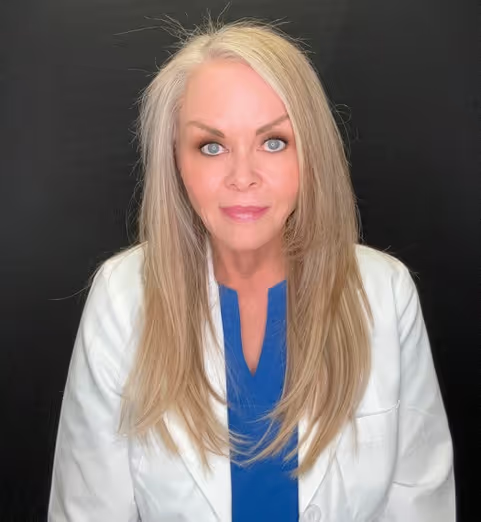
read More
More from our blog
Explore articles on skin care, treatments, and wellness.